|
THAT'S WHERE THE
GOLD WAS...
LIBRARY
OF CONGRESS
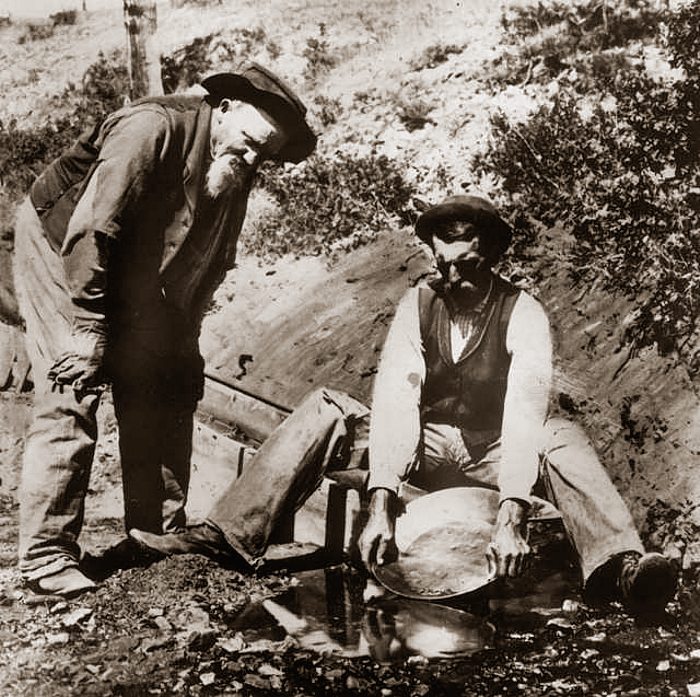
Placer
miners in Nelson Gulch, south of Helena, 1860-1870
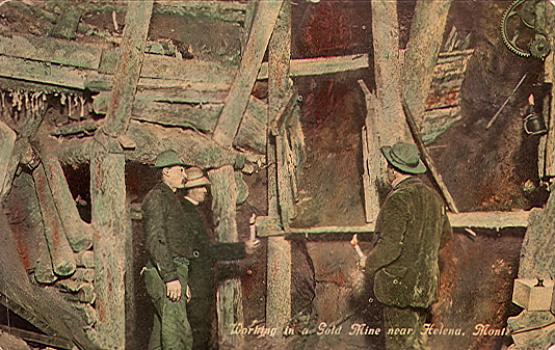
Mining
gold by candlelight near Helena, about 1910
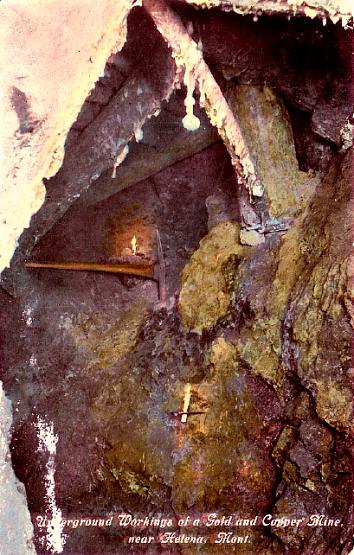
Interior of a
gold and copper mine near Helena, about 1910
| The relatively
easy-to-find placer gold played out around 1870. Hard rock and,
later, dredge mining continued until the 1940s. The two largest
producing mines were the Whitlatch-Union mine in Oro Fino Gulch
and the Spring Hill mine in Grizzly Gulch. |
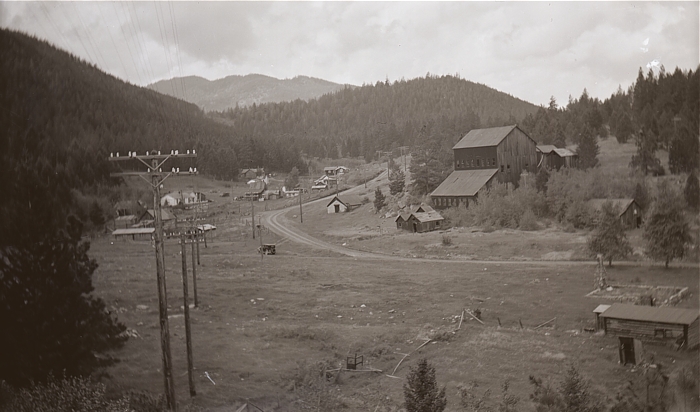
Unionville,
1920s
COURTESY OF SEAN LOGAN • CLICK ON IMAGE
FOR A BIG VIEW IN A NEW WINDOW
| Located
four miles south of Helena, Unionville was the camp for the Whitlatch-Union
Mine, which operated from 1864-1872, and again from 1905-1942.
It yielded over 17,000 ounces of gold, over 8,000 ounces of silver,
9 tons of copper, 9 tons of zinc and 40 tons of lead. |
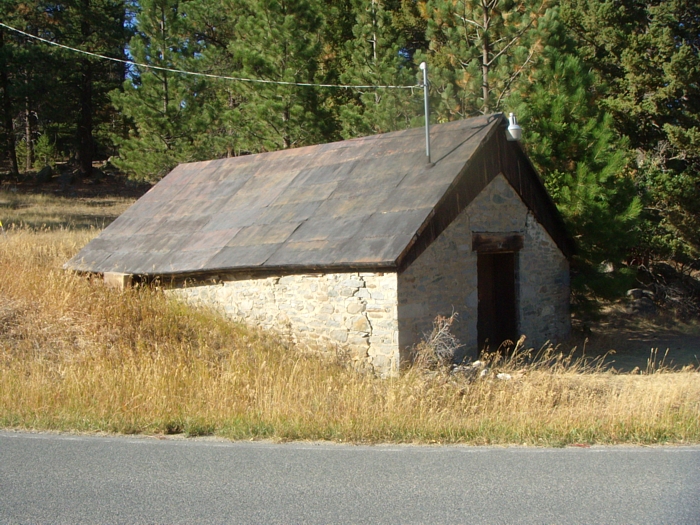
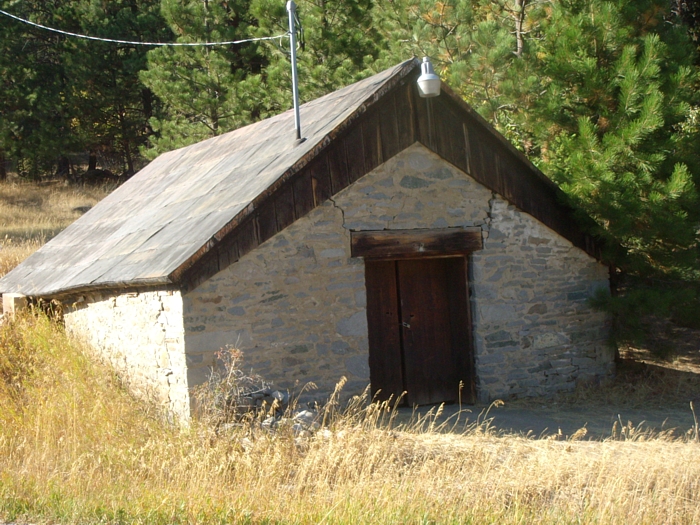
Powder
House of the Whitlatch-Union Mine, 2012
Photos by Pam
Attardo

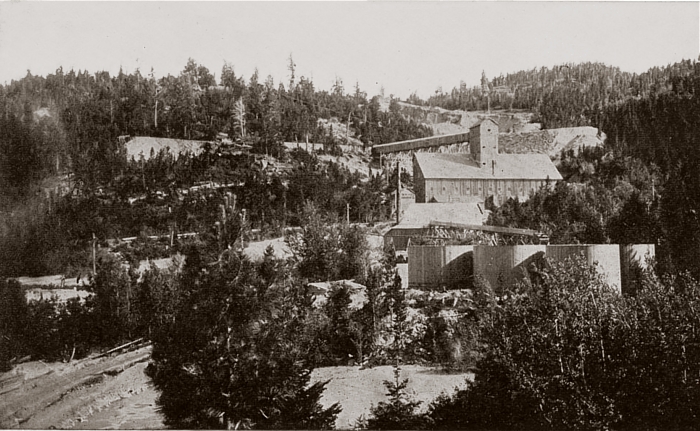
Big
Indian Mine
Pictured
about 1904
|
The Big
Indian mine was located in Jefferson County, in the hills midway
between Unionville and Montana City.
From the
Book 'Ore Deposits of the Helena Mining region, Montana'
by Adolph Knopf:
"The
two main claims, the Alabama and the Gold Hill, were located
in 1875. The ore was taken out from a large quarry, and a 10-stamp
mill was operated at a profit for a number of years...
Later the
property was taken over by a corporation and a 60-stamp mill
was erected and put in commission in 1902. This mill was operated
by electric power from the Missouri River Power Co.'s plant
at Canyon Ferry on Missouri River...
During 1903
and 1904 the Big Indian mine was the leading gold producer in
Jefferson County, but soon afterwards it was shut down."
|

Cox Lake
Located
in the hills south of Helena, at the head of Dry Gulch
Looking
South, Early 1900s
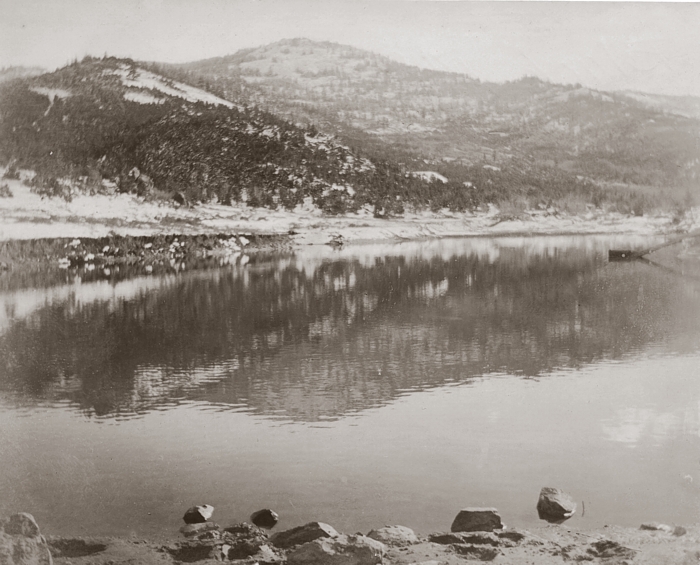
COLLECTION
OF KENNON BAIRD
Looking
North, 1928 and 2009
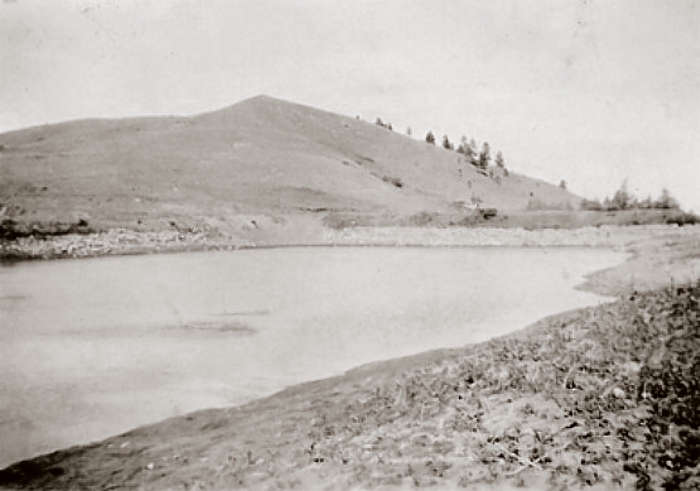
COLLECTION
OF NANCY GOODSPEED
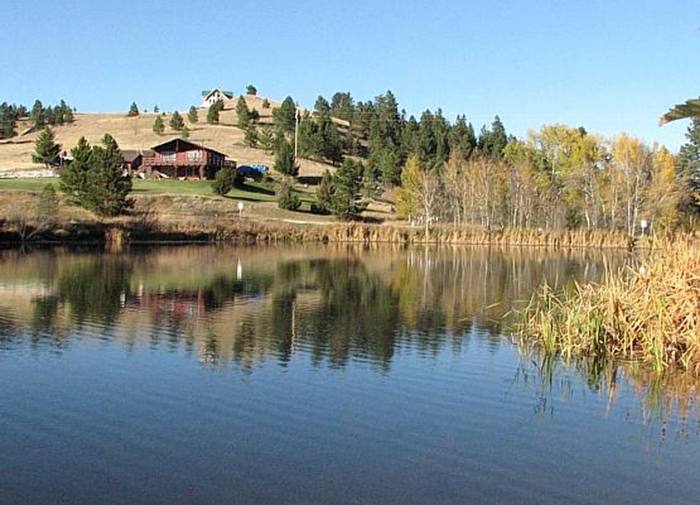 COLLECTION
OF NANCY GOODSPEED
COLLECTION
OF NANCY GOODSPEED
Looking
South Over Cox Lake, 1971 and 2009
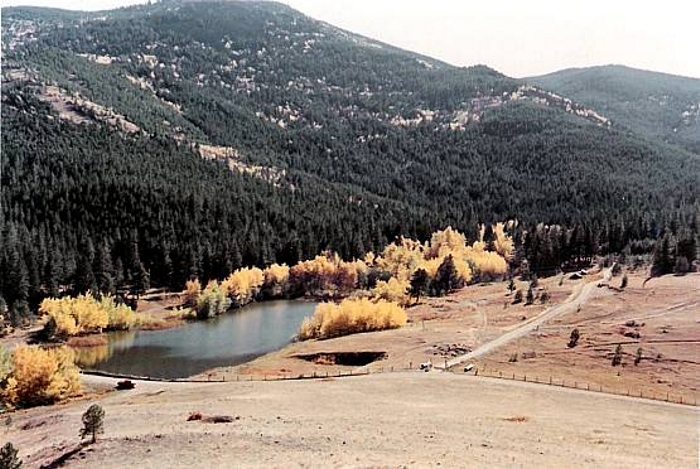
COLLECTION
OF NANCY GOODSPEED
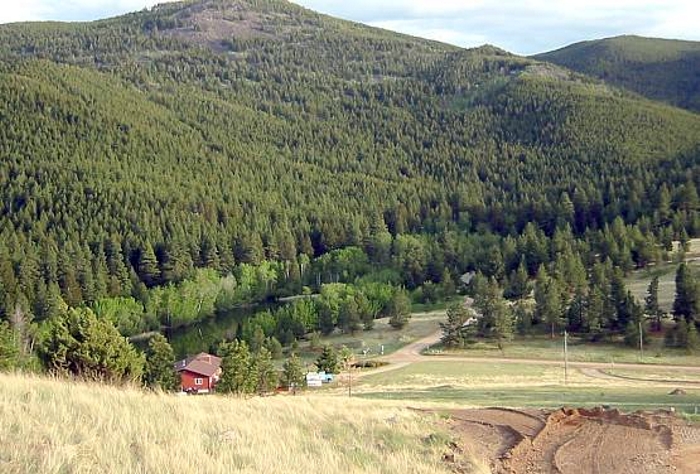
COLLECTION
OF NANCY GOODSPEED
Wickes,
Montana
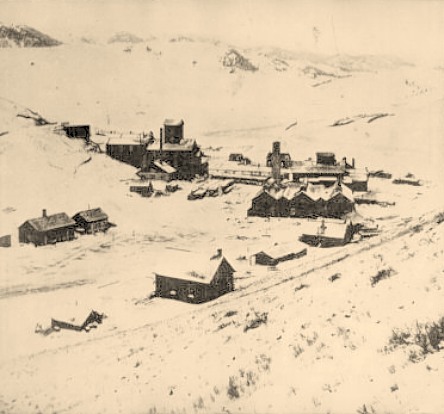
The silver ore
smelter at Wickes, southest of Helena.
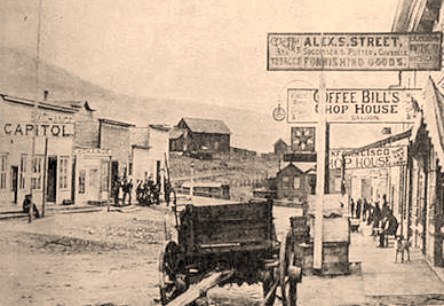
The main street
of Wickes.
Jefferson
City, Montana, circa 1895
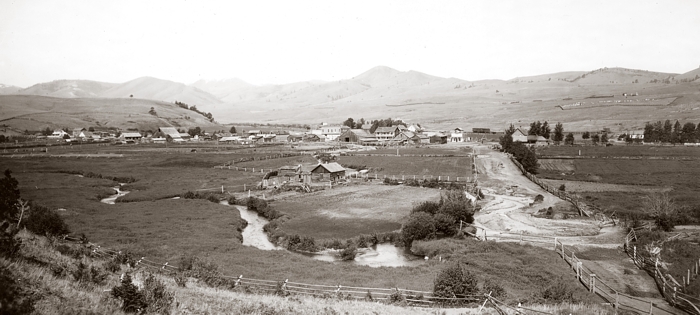
COLLECTION
OF KENNON BAIRD • CLICK ON IMAGE TO OPEN
A BIG VERSION IN A NEW WINDOW
Alhambra
& Sunnyside Hot Springs
Colorized Photo

Alhambra
Hot Springs (foreground) and Sunnyside Hot Springs (center
left), near Clancy Montana, about 1940. These two sanatoriums
were served by a branch of the Great Northern Railway. This
view looks east, from west of current I-15, up Warm Springs
Creek Road.
|
|
TYPHOID
TROUBLE
In 1908,
the Montana Board of Health addressed concerns over the spread
of disease, including typhoid, by these resorts. Both were piping
raw sewage into Prickly Pear Creek, and allowing seepage from
outhouses to contaminate groundwater. The contaminated water
was routinely pumped aboard Great Northern trains for use as
drinking water by passengers, some of whom would become ill
later and not know the cause.
From
the Montana Board of Health minutes, April 2 1908
COURTESY
OF CHARLEEN SPALDING
The
Clancy matter was again taken up. Dr. Tuttle said he hardly
knew what to do in regard to it. The people over there don't
seem to realize that the Board is trying to benefit them, and
if ordered to build water tight closets they would only take
their refuse and dump it in a place where it would be as harmful
as it is now. Alhambra and Sunnyside Springs should have a septic
tank or filter bed system, or else pipe the sewage down the
river to a point suitable for a sewer farm. The are a great
many water
closets belonging to the Great Northern located right on the
bank of the creek, and these should be put back about fifty
feet. It would aid materially if they would dig deep enough
so that they could fill in with about four feet of gravel and
sand, so that the contents of the closets would be filtered
before they could do any harm. Dr. Tuttle also spoke of treating
the infected wells with a solution of copper, and illustrated
the advisability of so doing.
Dr. Treacy said the greatest danger came from the sanitariums.
Many sick guests were entertained there, causing conditions
that soon became a menace to the people. A penalty should be
provided for the lack of action on the part of the proprietors
of these hotels, the same as is provided for the Spring Hill
people.
Governor Norris asked how far typhoid fever germs could be carried
down a stream and Dr. Tuttle said as far as a river will flow
in twenty five days. The Governor thought that if that was the
case, and the typhoid fever germs existed in the streams coming
from Clancy there would be danger of this city becoming infected.
Dr. Bruning said that the conditions at Clancy applied to all
the rivers of the State, and whatever action was taken with
regard to Clancy should also be taken with regard to the other
places.
Dr. Knowles asked what suggestions Dr. Tuttle or Dr. Starz had
to offer in regard to the matter. He said it was a great proposition
and one that needed immediate attention. A sewer farm seems
expensive, but if it is the only way to handle the matter they
must have a sewer farm.
Dr. Starz said in regard to the out-houses, that some of the
waste matter could be disinfected with sulphate of copper. That
would kill at least a good deal of the infectious matter and
the wells could also be treated in the same way. As to the effluent
from the springs, the only thing to do was to force the owners
of the springs to pipe the sewage to some place where it could
be properly purified. The excreta and everything from all the
sick people at Clancy goes into the stream, then the water of
that
stream is put directly in the big tank from which so many people
drink the water. The tanks on the railroad cars are filled with
this water, and the people who drink the water become sick after
they leave Clancy, without knowing the reason. Something must
be done. Since Clancy is not an incorporated town they haven't
enough money to build a sewer system, so the only way is to
prohibit them from dumping the sewage in the stream until it
is purified and they can do this only by putting it on a sewer
farm.
Dr. Knowles suggested that the Secretary have a consultation
with the owners of the two sanitariums. Tell them that it is
the desire of the Board that they find some way to take care
of this sewage - that the Board is willing to wait a reasonable
length of time and then if they have not taken some steps the
Board will have to find some other measures.
Dr. Bruning asked if there wasn't a definite law prohibiting
such disposal of sewage and Galen read a portion of a law to
that effect.
Dr. Treacy said that the matter should be attended to at once,
not only at Clancy but all over the State. Dr. Bruning moved
that the Secretary of the Board be instructed to tell these
people to provide some means of escape for the sewage.
Attorney General Galen offered us an amendment to that motion
that the Secretary of the Board should recommend the measures
to be taken to render the water safe. Let the Secretary investigate
the matter thoroughly and determine the best and most effective
means of handling the sewage and
then in the directions to these people outline the plan he has
determined upon.
To this Dr. Bruning added that all the water closets on the
bank of the stream should be destroyed.
This motion was carried.
|
Alhambra
Station, 1920s
Colorized Photo

Alhambra
Hot Springs Lake
Colorized Photo

Alhambra
Mineral Water
Colorized Photo

Mineral
water from the springs at Alhambra was shipped in tank cars
to Great Falls to be bottled and sold. The water, however, was
eventually determined
to be radioactive (radim-228), and unfit to drink.
|
Alhambra
Hot Springs Pool, 1940s
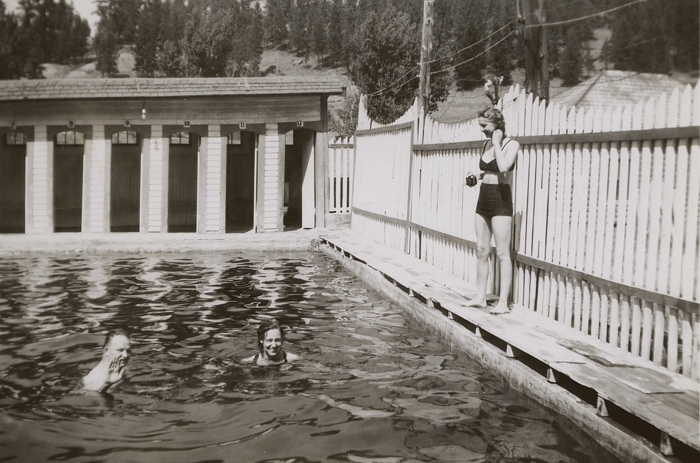
COLLECTION
OF KENNON BAIRD • CLICK ON IMAGE TO OPEN
A BIG VERSION IN A NEW WINDOW
Alhambra
Hot Springs Hotel Destroyed by Fire, 1959
Colorized Photo

COURTESY
OF JASON FRANCIS
Sunnyside
Hot Springs

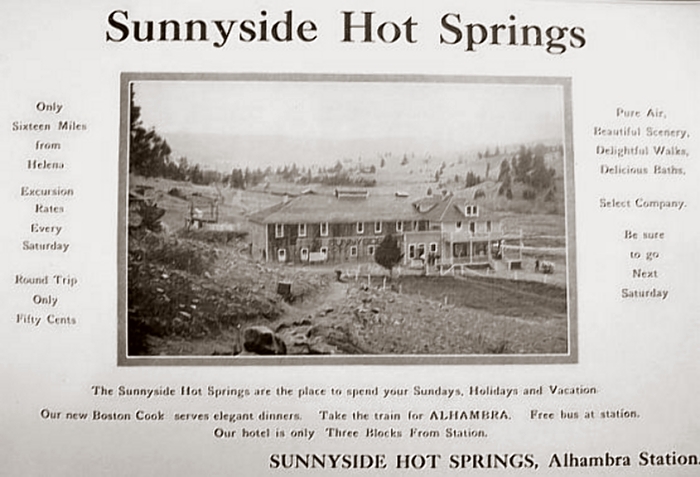
COURTESY
OF CHARLEEN SPALDING
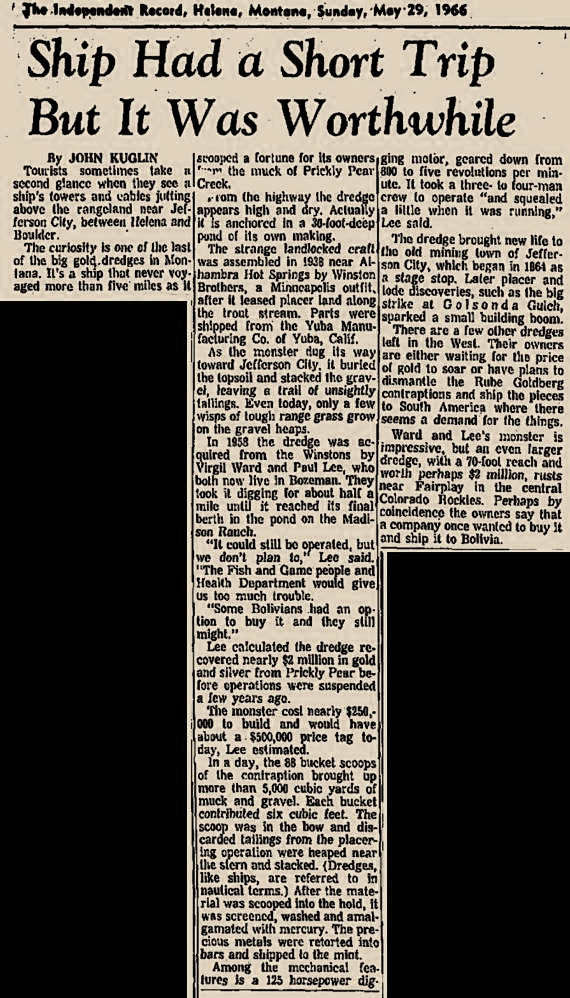
Jefferson
City Dredge
Colorized Photo

COURTESY
OF DAVE THOMAS
| This gold
dredge was a familiar sight near Jefferson City for decades. Here
we see it at the present-day junction of I-15 and Tizer Lake Road. |
Boulder and Basin Montana
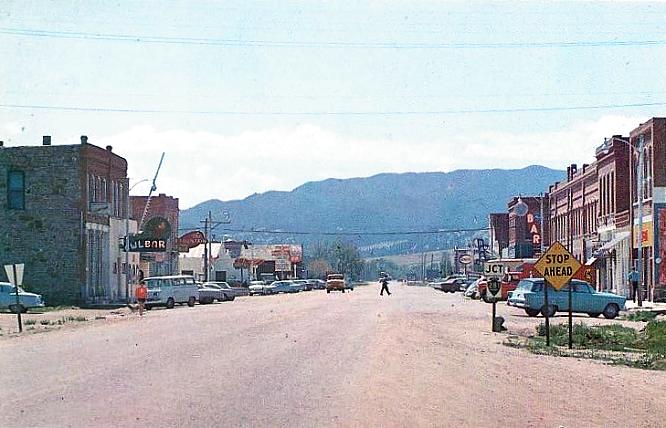
Main St. in Boulder,
Montana, 1960s.
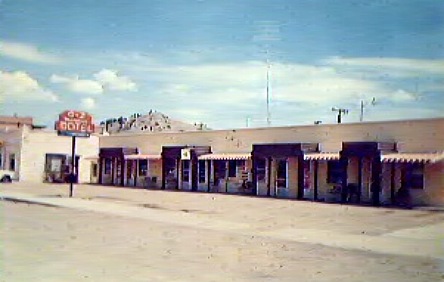
The O - Z Motel
in Boulder, Montana. Date unknown.
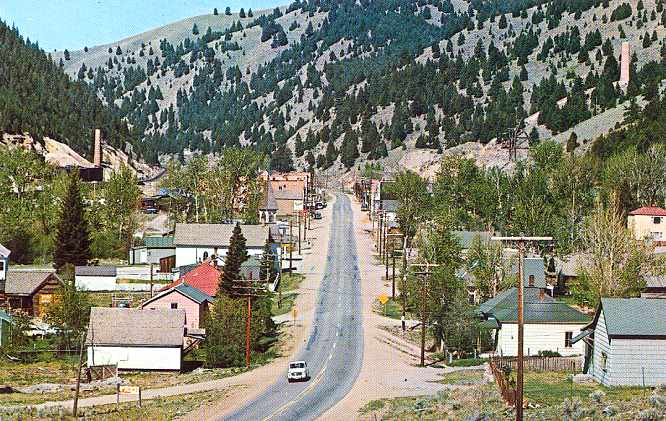
COURTESY
OF TOM KILMER
| The old Butte
highway, Basin, Montana - 1960's postcard view. Basin is located
just a few miles west of Boulder, and was the hub of a moderately
successful gold
mining region from about 1862 to 1911. The smelter stack on
the right still stands. |
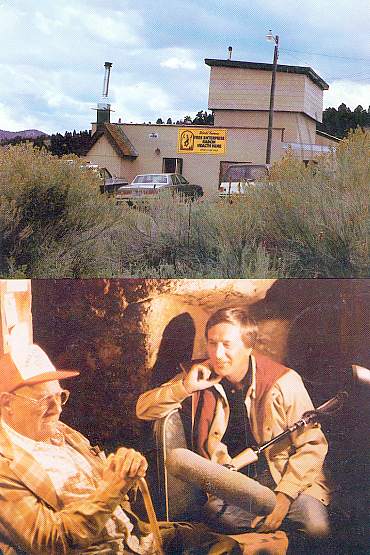
Free
Enterprise Radon Health Mine
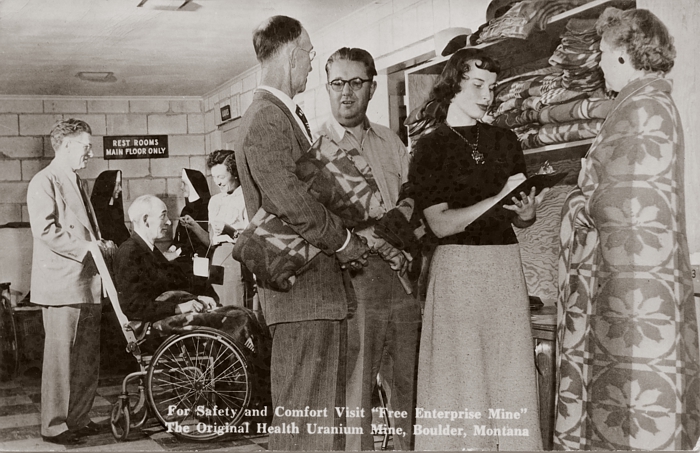
COLLECTION OF KENNON BAIRD • CLICK ON IMAGE TO OPEN A BIG VERSION IN A NEW WINDOW
| The Free
Enterprise Radon Health Mine near Boulder has been in operation since about 1951. Visitors to
this and other area radon mines pay to sit in radioactive underground
rooms. Their hope is that the low-dose radiation will improve
their health. Many claim to have been helped by such treatments,
but there is no scientific consensus on the matter. You may visit the mine's website here. |
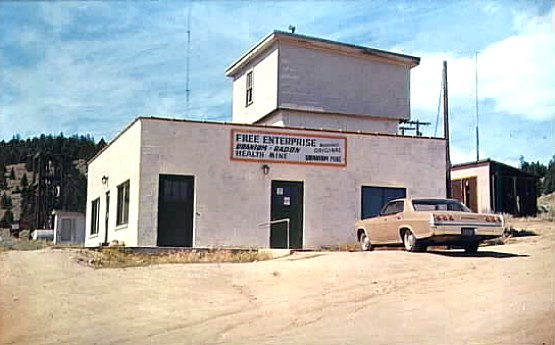
COURTESY
OF TOM KILMER
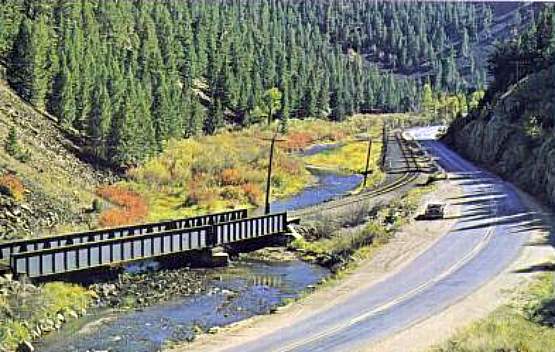
The old road to
Butte in Boulder Canyon, near Basin, Montana.
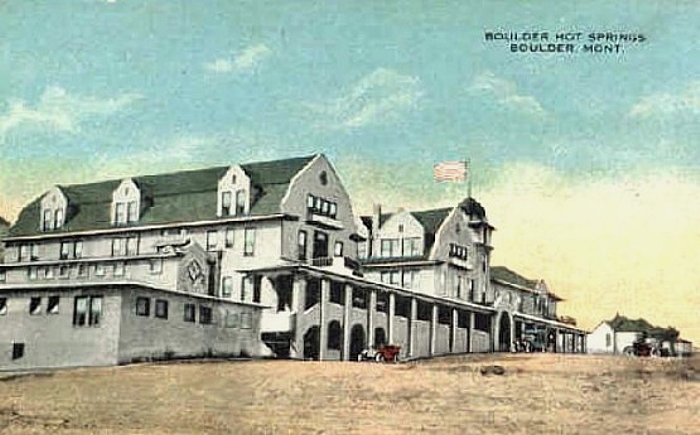
Boulder
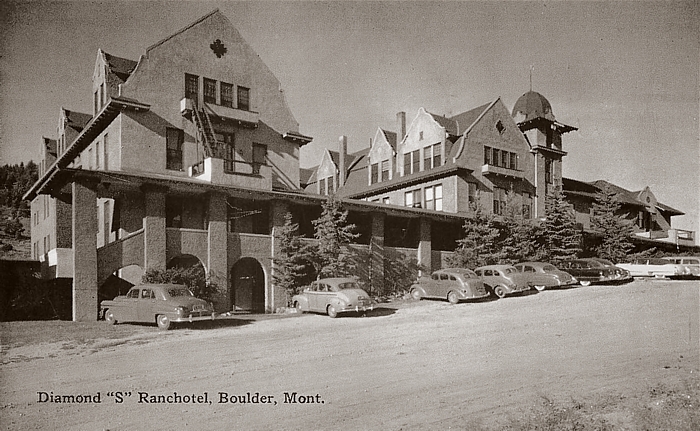
Hot Springs aka Diamond "S" Ranchotel
|
Boulder
Hot Springs, located a few miles south of Boulder, Montana.
Built in 1890, it was later known as the Diamond S Ranchotel,
and is now again operating as Boulder Hot Springs. In the 1960's,
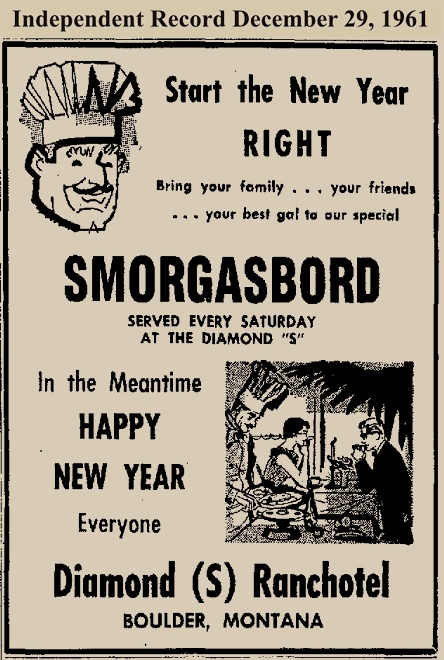
the Diamond S was famed for its Saturday night smorgasbords.
For
an excellent history of the establishment, please visit the
Boulder
Hot Springs website.
|
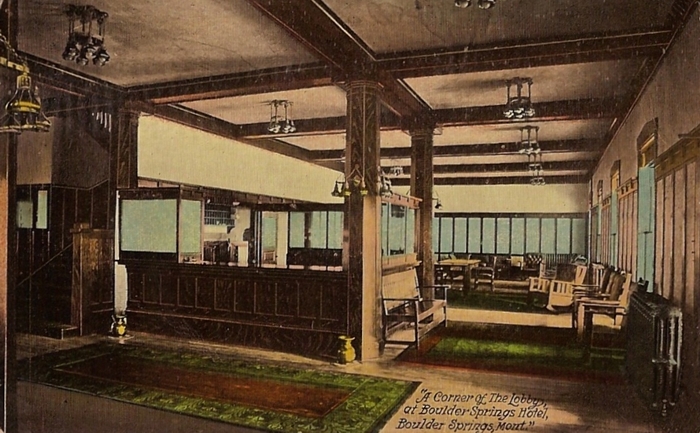
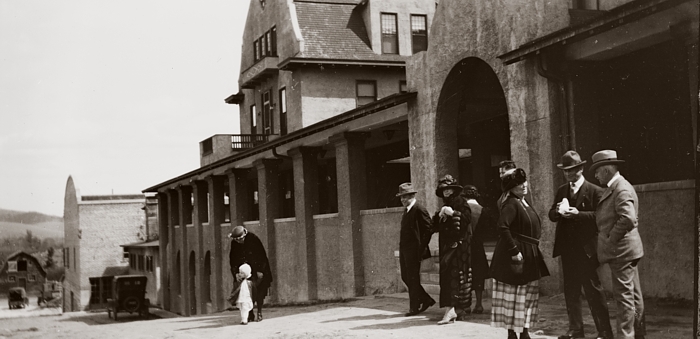
Boulder
Hot Springs Lobby, circa 1900
Early
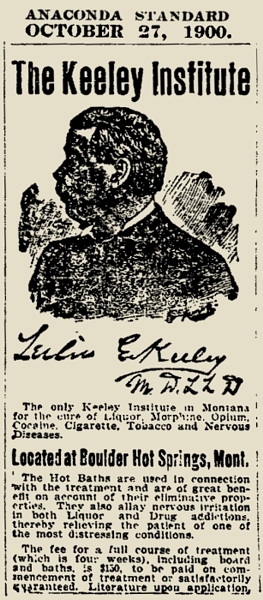
Detox Facility
Beginning
in 1893, a Dr. George W. Archer operated a "Keeley
Institute" franchise at Boulder Hot Springs. The treatment
consisted in part of four-times-daily injections of "bichloride
of gold". Another Keeley franchise operated at Alhambra
Hot Springs, near Clancy...
|
|
|
|
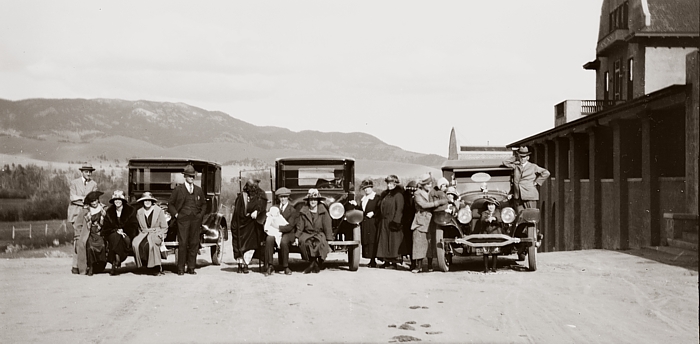
Two Views of Boulder Hot Springs, 1920s
COURTESY
OF WENDI KOTTAS PETERSON • CLICK ON IMAGES
FOR LARGER VERSIONS IN NEW WINDOWS
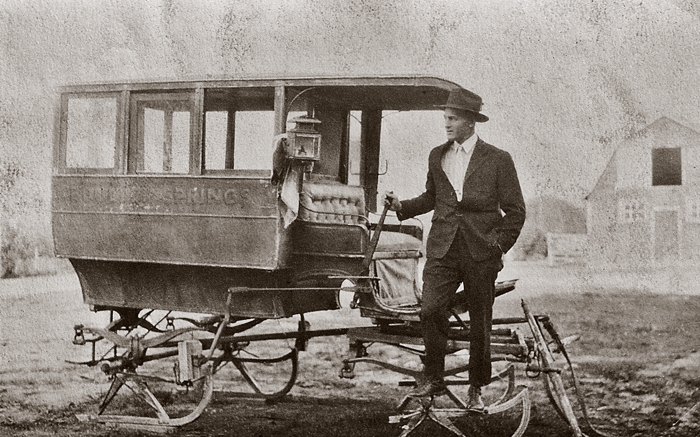
Boulder Hot Springs Sleigh, circa 1926
COURTESY
OF JACK FROST •
CLICK ON IMAGE FOR A LARGER VERSION IN A NEW
WINDOW
Standing on the front
runner of the sleigh is Lewellyn "Lewis" Frost (1891-1929).
Boulder Hot Springs Becomes "Diamond S Ranchotel" in 1940
| in 1940,
James E. Murray sold the resort to C.L. “Pappy” Smith,
who changed the name to the "Diamond S Ranchotel", by
which it was to be known for the next 35 years or so. |
1940s
Postcard View
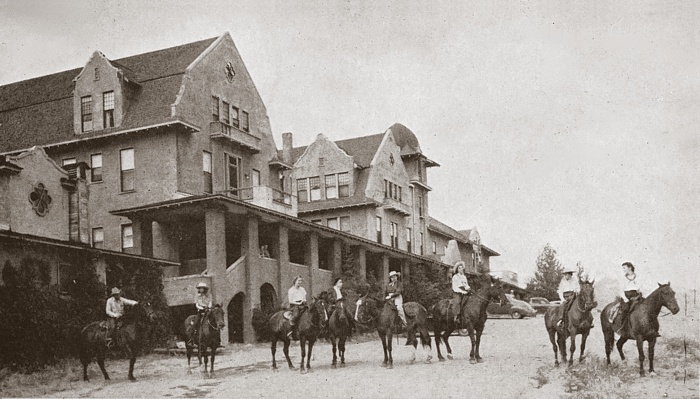
COLLECTION
OF KENNON BAIRD
Early
1950s Postcard View - Diamond "S" Ranchotel
COURTESY
OF THE DAVID POOR COLLECTION • CLICK ON
IMAGE TO OPEN A BIG VERSION IN A NEW WINDOW
Early
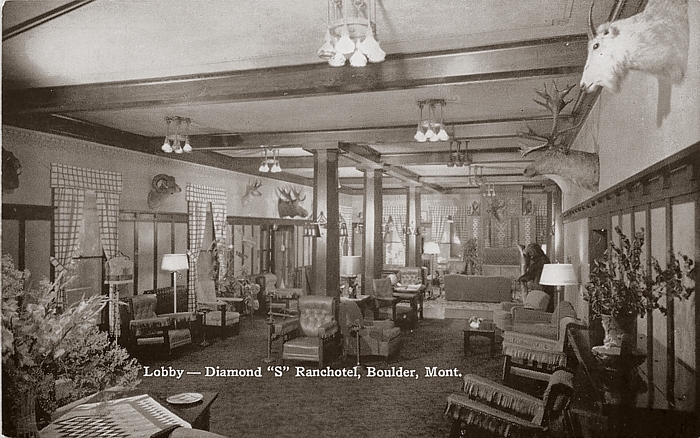
1950s Postcard View - Diamond "S" Ranchotel Lobby
COURTESY
OF THE DAVID POOR COLLECTION • CLICK ON
IMAGE TO OPEN A BIG VERSION IN A NEW WINDOW
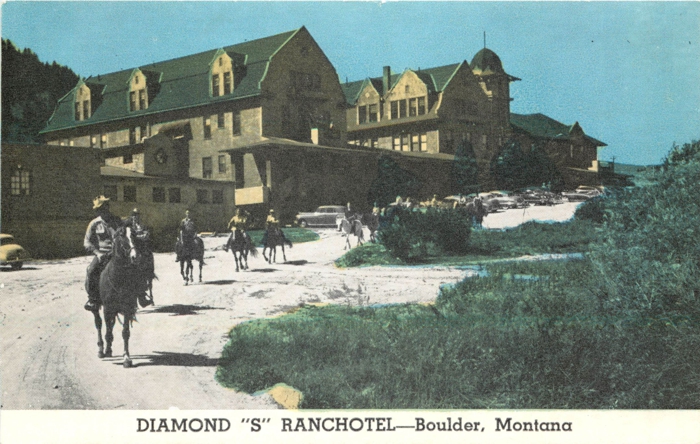
Two Colorized Postcard Views
COURTESY
OF THE DAVID POOR COLLECTION • CLICK ON
IMAGE TO OPEN A BIG VERSION IN A NEW WINDOW

COURTESY
OF THE DAVID POOR COLLECTION • CLICK ON
IMAGE TO OPEN A BIG VERSION IN A NEW WINDOW
"...definitely
not a honky tonk."
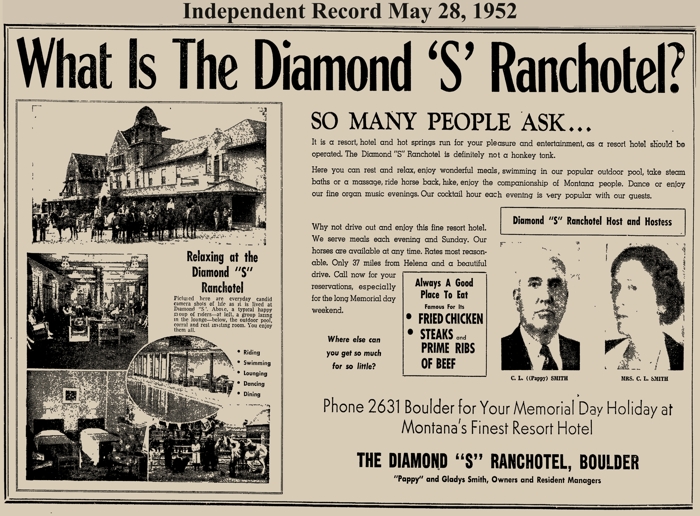
CLICK
ON IMAGE TO OPEN A BIG VERSION IN A NEW WINDOW
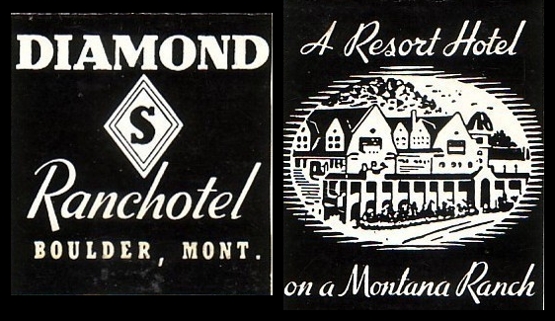
Matchbook
1940s-50s
Popular
Smorgasbord
Elkhorn, Montana
Colorized circa 1898 Photograph

COURTESY
OF JASON FRANCIS •
CLICK ON THE IMAGE TO OPEN A BIG VIEW IN A NEW WINDOW
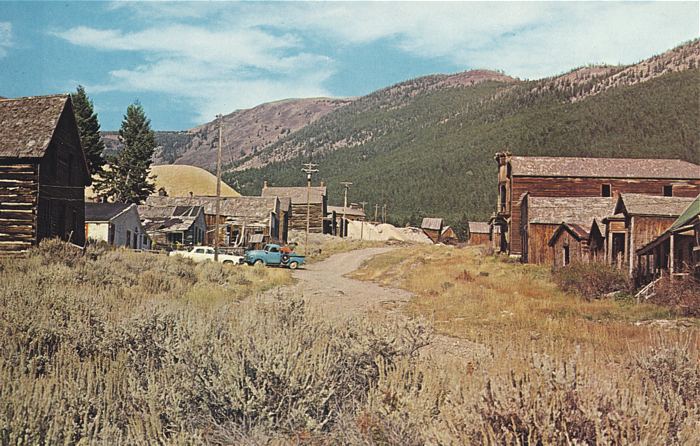
| What is now
the ghost town of Elkhorn is located in the Elkhorn Mountains,
about 40 miles SE of Helena. Area silver mines were major producers
from 1897-1899. |
Elkhorn,
Montana
- probably 1970s
COLLECTION
OF KENNON BAIRD
|